
Why are They Necessary
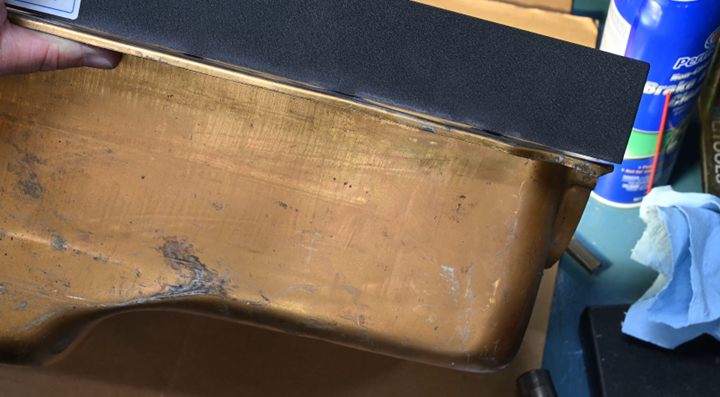
Surface Damage: Causes and Prevention
Most gasket surface damage occurs during the cleaning process. There is no single “perfect” method for preparing a gasket surface, so caution is always required.
Recommended Practices:
- Use plastic scrapers (like the Permatex Safer Scraper) or plastic razor blades as the first choice for removing old gasket material.
- If these tools are ineffective, cleaning must be done carefully to avoid gouging or uneven removal.
- Power tools like die grinders with “gasket removal discs” or “surface conditioning discs” can speed the process, but they also pose the greatest risk of surface damage. Uneven pressure or holding the tool in one spot for too long can quickly mar the surface.
- Avoid metal scrapers, wire brushes, or sandpaper unless necessary, and use carefully
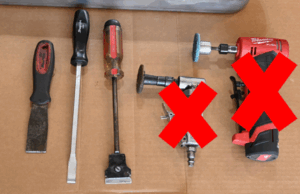
Material Matters:
The type of surface affects vulnerability to damage. For example:
- Cast iron is hard and more forgiving.
- Aluminum is softer and more easily damaged, so extra caution is required when cleaning these surfaces.
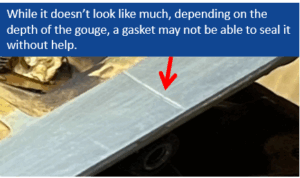
Technician Best Practices Summary
- Inspect the surfaces: Check for warpage, scratches, or prior damage
- Choose the right sealing method: Cut gasket + coating or RTV gasket maker, never both
- Prepare surfaces carefully: Use plastic scrapers first, avoid aggressive tools unless necessary
- Enhance sealing as needed: Apply Cut Gasket Coatings to minor imperfections, especially on softer or previously damaged surfaces
- Torque correctly: Ensure clamping pressure matches OEM specs to avoid leaks or blowouts
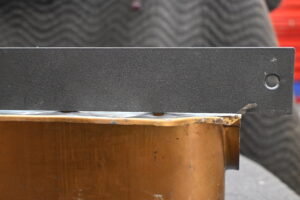
Using a straight edge to check for surface damage is not performed nearly enough on a regular basis.